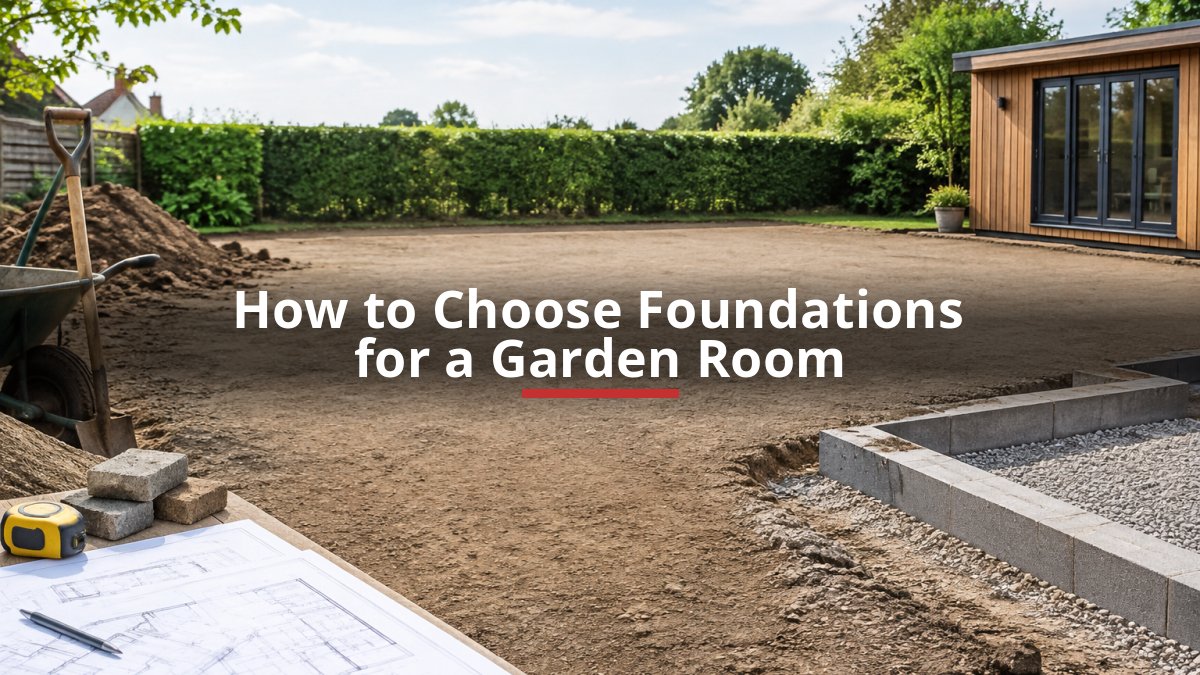
Last Updated: 17 November 2026
Quick Summary
Knowing how to choose foundations for a garden room starts with the ground beneath it. A concrete slab suits level, stable, well drained sites, while screw piles suit sloping, soft or variable ground and need minimal excavation. Arrange a site investigation before committing to a foundation type.
- A site investigation with trial pits or boreholes checks soil type, depth to firm strata, groundwater and drainage.
- Soft or made-up ground near old trees or former outbuildings can move over time, even when the surface looks firm.
- Concrete slabs suit level, stable ground with good drainage and a full, even bearing surface.
- Screw piles suit sloping sites, poor or variable soil, and gardens where minimal excavation is preferred.
- Confirm planning permission and building regulations approval before any groundwork starts or materials are ordered.
Table of Contents
- Checking Ground Conditions With a Site Investigation
- Choosing Between a Concrete Slab and Screw Piles
- Confirming Building Regulations and Planning Before You Dig
- Frequently Asked Questions
Checking Ground Conditions With a Site Investigation
Learning how to choose foundations for a garden room starts with the ground underneath it. Ground conditions are the first decision in any garden room project, because soil determines what the structure can safely rest on. A foundation that suits one plot can fail on another a few metres away.
A site investigation tells you what the ground is actually doing. For a fuller explanation of soil testing and groundworks before you commit to a foundation type, read this guide. It usually involves trial pits or boreholes to check soil type, depth to firm strata, groundwater and drainage. A site investigation is best arranged before you commit to a foundation type, not after the base is poured. Find out when trial pits and boreholes are needed, what they reveal and what they cost.
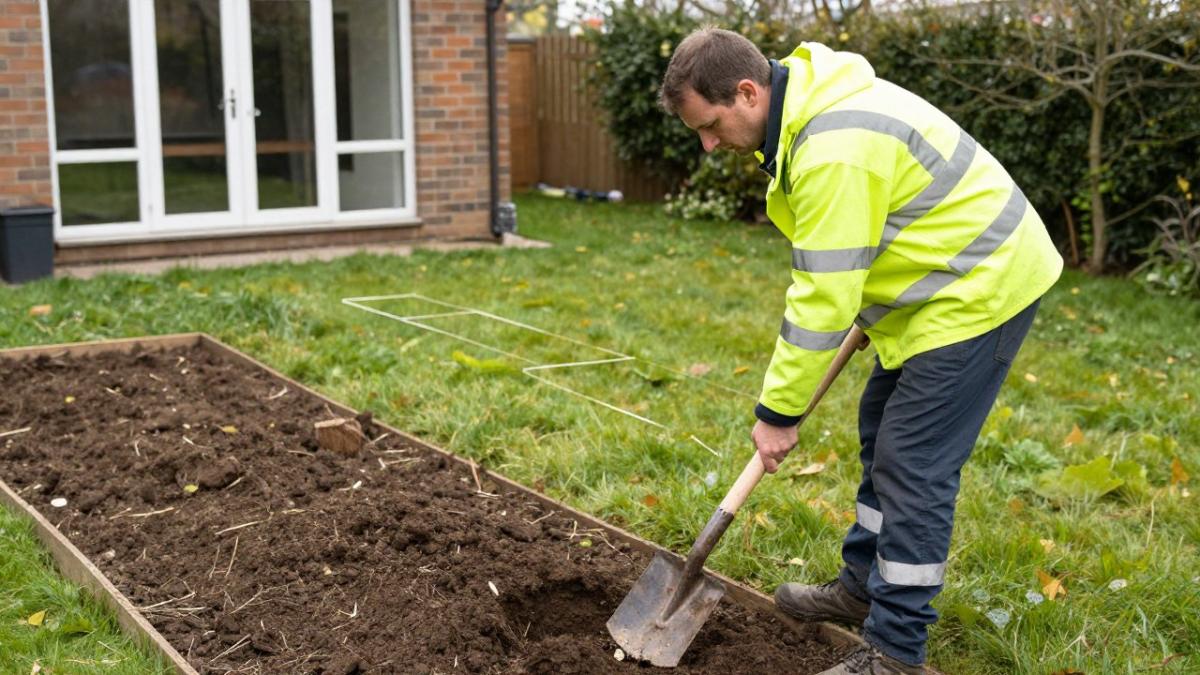
Watch out: soft or made-up ground near old trees or former outbuildings can move over time, even when the surface looks firm.
Choosing Between a Concrete Slab and Screw Piles
For most garden rooms, knowing how to choose foundations for a garden room comes down to a concrete slab or screw piles. A concrete slab suits level, stable ground with good drainage and a full, even bearing surface. Screw piles suit sloping sites, poor or variable soil, and gardens where minimal excavation is preferred.
Compare the two on the factors that matter for your plot:
| Factor | Concrete slab | Screw piles |
|---|---|---|
| Best ground | Level, stable, well drained | Sloping, soft or variable |
| Excavation | Significant | Minimal |
| Site access | Needs space for mixers and plant | Lighter equipment |
Pricing depends on site access, ground conditions and the size of the base, so request a quote for your specific garden. You can get a free quote for foundation and groundworks work from Thane Construction.
Confirming Building Regulations and Planning Before You Dig
Before any groundwork starts, confirm whether your garden room needs planning permission and building regulations approval. Once you are ready to move forward, you can request a quote for a residential build or garden room. Requirements differ by size, height and use, so check with your local planning authority before you order materials.
Building regulations set out structural and drainage standards for foundations. Read the current London Building Regulations requirements, including Part A structural rules. Checking the design early can help avoid rework once the base is in place.
Frequently Asked Questions
Do I need planning permission for garden room foundations?
Many garden rooms fall under permitted development, but this depends on the size, height and position of the building and whether the property has restrictions. Foundations themselves are usually not the trigger, but the structure they support may be. Check with your local planning authority before you start, and confirm the position of the building against your boundaries. If in doubt, a short pre-application enquiry can save costly changes later.
Do garden room foundations need to comply with Building Regulations?
Yes, in most cases. A garden room used as a habitable space, such as a home office or annexe, generally needs to meet the Building Regulations, including the requirements for structure and ground movement. Confirm the current requirements with the official guidance from the relevant authority. Foundations must be designed for the ground conditions on site. A building notice or full plans application may be needed, and inspections will be carried out during construction, so it is worth checking requirements early in the project.
How do I know if my soil is suitable for a garden room base?
The only reliable way to know is a site investigation. A surveyor or structural engineer can check soil type, bearing capacity and drainage, and identify problems such as soft clay, made ground or a high water table. The results determine whether a concrete slab, ground screws or another foundation type is suitable. Thane can help arrange this as part of a project.
